

(Note: the usual plan is to smoosh the middle- & high-school curriculums into one post… but there’s so much to say about history that I’m going to split this up.)
In our last wireframe, I suggested that a rich elementary history curriculum can be seen as a rope of two threads:
🧵 A memory palace
🧵 Stories
As kids get older, each thread evolves. In elementary school, we rooted kids in the story of the world, but in middle school, something riskier needs to begin. The picture must sharpen; the shadows must deepen. History has to transition from a parade of memorable tales to a stranger, more complicated landscape.
In these four years, we want to master the techniques to help us tame our alien, exotic, and fascinating reality. This is the “climb” phase of our journey. Starting in 5th grade, we can take full advantage of the tools of ROMANTIC (🦹♂️) understanding (Egan’s phase of heightened detail, limits, and heroic scale — for a reminder, take a look here). We add resolution and texture and let students feel how untidy the past is. Our goal is to create history geeks who feel its weight and strangeness, and after four years are hungry to explore it at a higher level.
MS history thread 1: 🧵Memory palace
In elementary school, we built a memory palace to hold the ~100 thrilling history stories we learned. Now, we want to begin to tie all ~100 stories together into one huge narrative. In middle school, we have two practices to do this: writing a song, and playing a game.
🧵Memory palace, Practice A: Write an epic history song
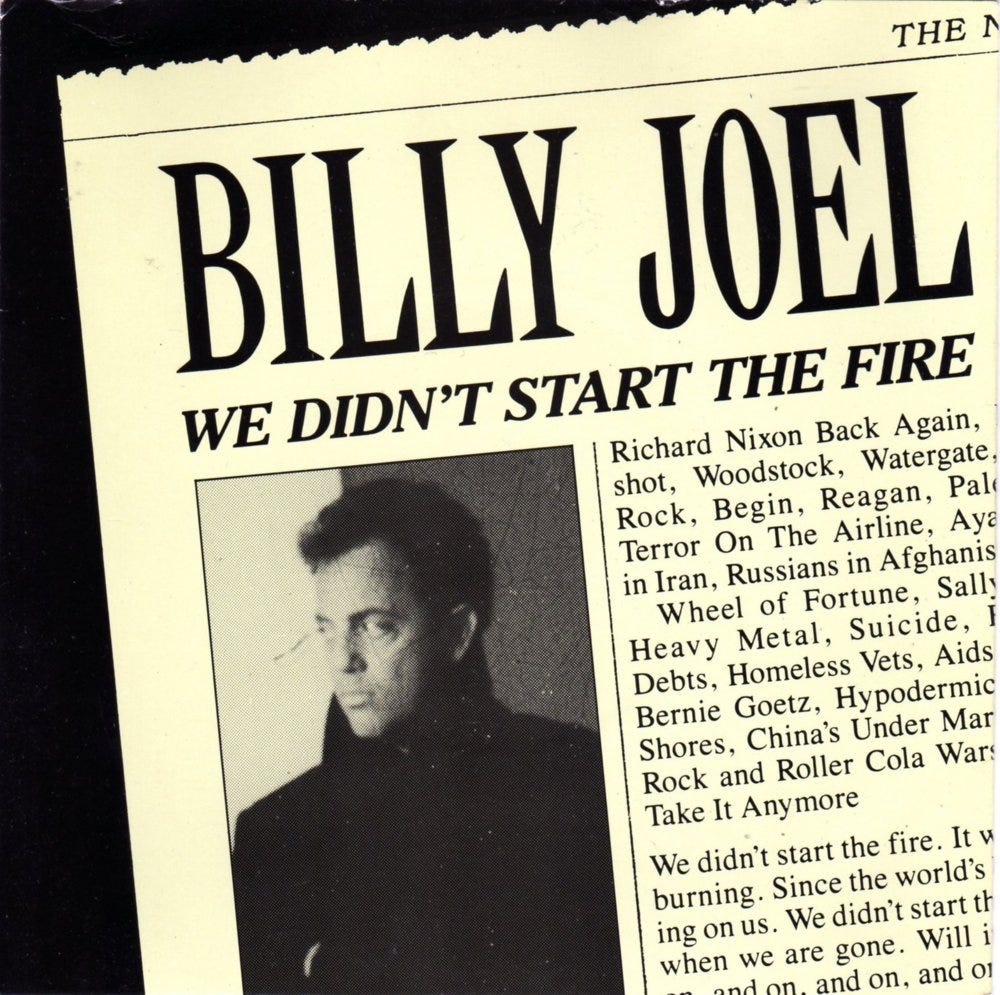
Here, you’re going to incorporate references to all ~100 stories into a single 🧙♂️SONG.
I.I.: What’s gained from this? (We’ve already made those images.)
The task of building a personal narrative of the history of the world is no small feat; we’re using all the tools we have. Both 🧙♂️IMAGES and 🧙♂️SONGS, historically, have been used to secure memory; here, they buttress each other.
A song, too, adds meaning: it brings in your family or classroom’s humor and way of looking at the world. And a song links together lyrics into a cohesive whole.
I.I.: When should we create this song?
We see two options: make it all at once as you start middle school, or stretch it out a little at a time.
I.I.: I’m no poet.
The English folk tradition has your back. Just write each room’s stanza in common meter — four lines that alternate between iambic tetrameter and iambic trimeter:
da-da-da-da-da-da-da-da
da-da-da-da-da-da
Common meter is ridiculously versatile:
Amazing grace how sweet the sound
That saved a wretch like me…There is a house in New Orleans
They call the Rising Sun…Just sit right back and you’ll hear the tale
The tale of a fateful trip…O beautiful for spacious skies
For amber waves of grain…I want to be the very best
Like no one ever was…
Any meter that can span devotional hymns to the Pokémon theme song can work for your memory palace too.1 To make all five spots fit into each space, you just need to cram two events into the fourth line.
I.I.: What about rhymes?
In common meter, it’s common typical to have the odd and even lines rhyme: ABAB. But in a pinch, you can just rhyme the even lines: ABCB.
By the end of this, you’ll be able to sing your way through world history! A moment’s work with ChatGPT gives me anchors for the 11th, 12th, 13th, and 14th, and 15th centuries CE:
He sailed beyond the western foam
She ruled in Aquitaine
He drove his riders ’cross the steppes
Peasants rose, fleets crossed the main.
(Can you guess any of these characters?2)
Of course, you could also decide to write a parody song of an existing song. Just pick something you love to sing aloud, and then Weird Al the crap out of it. Squeeze together some tiny reference to each of your ~100 history stories into your version, in order. (Alessandro and I suspect that an over-the-top epic song might fit this best — think “American Pie”, “Bohemian Rhapsody”, “Stairway to Heaven”. We also suspect that this is the sort of thing an LLM should be good at helping with… but the frustrated last hour of my workday suggests that’s wrong.)
If you run out of song, you can always add an extra stanza, or continue with a different song entirely.
🧵Memory palace, Practice B: The murder board game
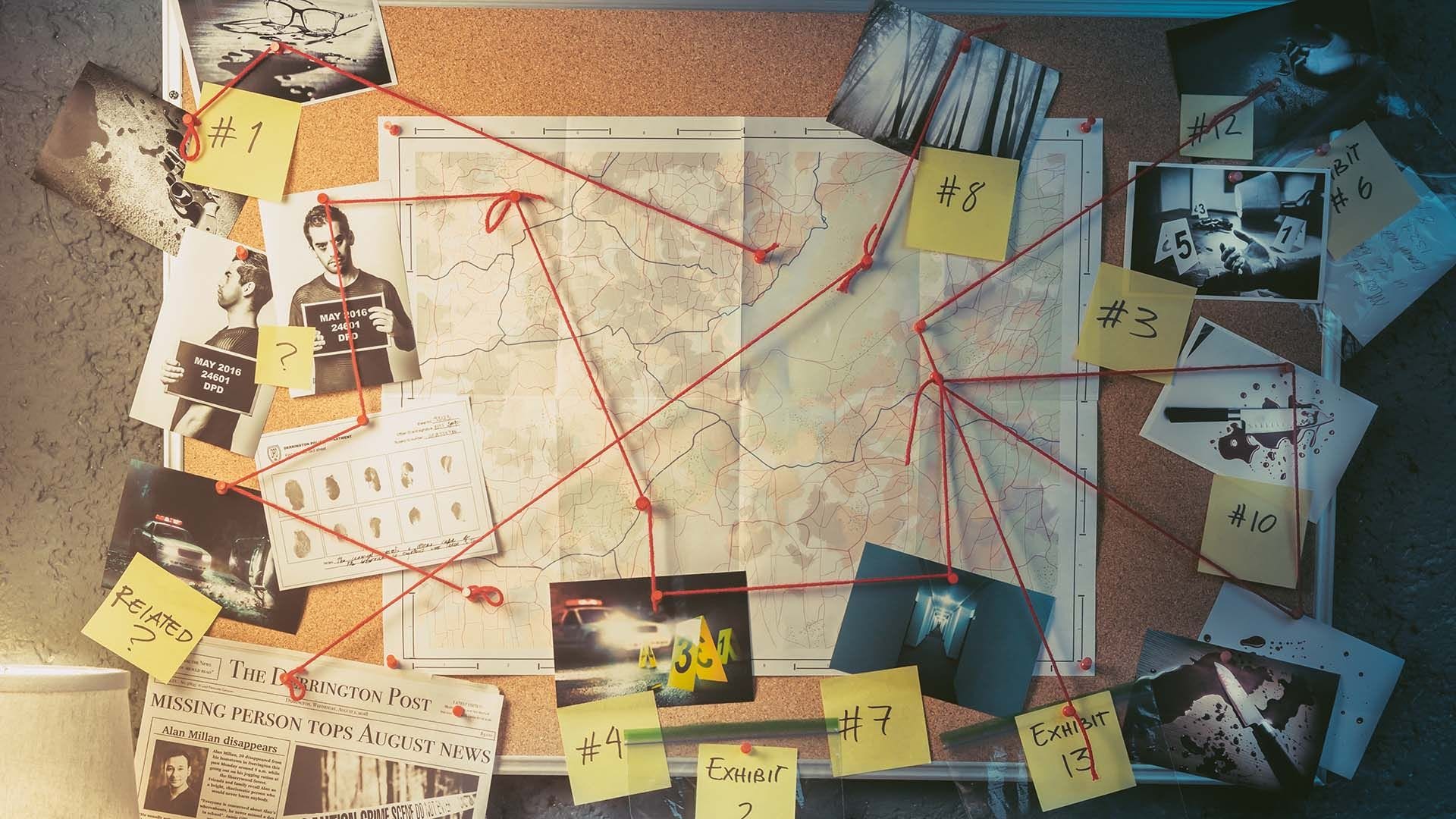
Here, you’re going to turn your memory palace into a sort of “murder board of the mind”.
A murder board, of course, is a way to show connections between disparate pieces of information (usually with colored string). Our game, alas, will not use colored string. (We’re assuming you want to be able to walk through your school/house without being garroted.) You can think of this more as a “murder board of the mind”. What it takes from the crime-solving tool, however, is a conviction that it can be fun to make connections. And in the middle-school years, connection-making is the whole game.
In sum, ask kids to find stories in their memory palace that have something in common. You can ask about geography — which stories take place…
in a desert?
on a mountain?
on the sea?
on an island?
in the Southern Hemisphere?
along a major trade route?
in a Spanish-speaking country?
Or you can ask about characters — which stories feature…
a religious leader?
a teenager?
a king or queen?
a president or prime minister?
a scientist or inventor?
a political revolutionary?
These, at least, are simple examples. As time goes on, you can make them more complex: which stories take place in a contested borderland? Which stories feature an ambitious outsider, or someone who becomes a symbol larger than themselves?
Imaginary Interlocutor: What’s the educational purpose to this?
Story-memory is a great anchor, but it’s not enough. We want to turn the memory palace from something we think about to a tool we think with… and to do that, we need to prompt kids to search between stories and notice shared traits.
I.I.: Games should be fun. Is this fun?
We think it really could be… but we’re not game designers. Think of the memory palace as a meticulously-designed board that you could play many types of trivia game on. For that, you want to pick some constraints. As Ian Bogost writes in Play Anything:
Play is the operation of structures constrained by limitations…. The limitations make games fun.
For the moment, we’ll leave it to you to imagine what constraints you could add for kids of various ages. We’re imagining constraints in movement (you can only get around, say, by crab-walking, or stumbling around blindfolded) and in time/quality (who can find two events the quickest vs. who can find the best example by the end of three minutes).
The roots are now tangled deep, and the climb is underway! High school will demand something sharper still — look forward to that in the next post.
MS history thread 2: 🧵Stories
The stories that kids will have learned by the end of elementary school will be packed with meaning and emotion… but for all that, they’ll still be rather simple. In middle school we’re going to return to those stories to experience them in a whole new way.
I.I.: How are we going to do that?
If we were lazy, we could just re-read the stories again — kids change a lot over four years, and they’d naturally see new things in the stories. As I quipped in Spiral History°:
Who hasn’t had the experience of re-watching a beloved childhood film (or re-reading a beloved childhood novel) as an adult, only to discover it was totally different than we’d first found it?
But just as the kids grow, our stories can grow, too. We see at least two separate options for how to revisit these events: judge a character, and explore a society.
🧵Stories, Practice A: Judge a character
When you revisit the history stories first heard in elementary school, you can zoom into the main character, and try to figure out what they were really like. What were their virtues? Their vices? What kind of person were they? In the end, should you see them as one of the “good guys”, the “bad guys”, or something else?
I.I.: Goodness, are we going to be so childish as to imagine the world is divided into “heroes and villains”?
This division is worse than “childish” — it’s probably one of the great sources of evil. The goal of this part of the curriculum, in fact, is to overcome it. That, however, is much harder to do than it first might seem: binaries like “good guys vs. bad guys” go deep. We’re going to use it as a framing device specifically so we can challenge it, and help kids see that the past resists easy moral sorting.
I.I.: Oh, so you’re one of those precious postmodern “there are no real heroes” people?
On the contrary — true heroism shines out of many people, and others make themselves factories of moral putrefaction. The only way to appreciate when you find real saints and arch-sinners, though, is to actually move past our knee-jerk reactions and judge people thoughtfully.
I.I.: This feels weird. Is this weird?
This is totally common. So many adolescents go through the steps of
Person X is my hero
wait no Person X is a villain
wait wait the world has defied my categories yet again!
that Hegel was forced to come up with his Dialektik.
Because we’re at risk of being misunderstood, this warrants writing out a full narrativization (see here for a reminder of what that means).
Phase 1: 💥 Orient
Start by re-reading the elementary school 🧙♂️SIMPLE STORY. As you hit each cliffhanger, pause and ask whether the kids are seeing the main character as more of a good guy or a bad guy.
Phase 2: ⚠️ Complicate
To judge this person fairly, we need to amass some detailed historical knowledge about them — call it 🦹♂️TRIVIA. To do this, we’re going to need to learn a lot about them in a short time.
I.I.: That sounds hard and boring.
Ah, this is where Egan education shines brightest! You can cut right to the Romantic tools. What’s some juicy 🦹♂️GOSSIP about them? Some damning (or inspirational) 🦹♂️QUOTES? How did they push up against 🦹♂️LIMITS as they worked to achieve their goals?
To find these, you can bring in living books,3 and other resources like YouTube videos, documentaries, and podcast episodes. In a pinch, you can just ask an AI to get you started on this. (These are famous characters, after all — a lot has been written about them.) In the later years of middle school, you can also step up your historical game and present kids with 👩🔬ORIGINAL SOURCES that talk about the character from different perspectives.
Bit by bit, students are asked to hold more in mind at once — more detail, more contradiction, more unresolved tension.
Phase 3: 🐛 Transform
Kids should make something that brings together what they’ve learned into an argument — a position in an 👩🔬IDEA FIGHT — about what this person really was like.
What they make can rotate between characters. Some ideas:
a formal essay
a debate between one of the character’s friends, and one of their enemies
a semi-fictionalized “tell all” confessional from the character themselves
the script for a drama
a series of political ads (for or against)
Phase 4: 🪢 Integrate
As always, end by choosing something from the experience to preserve into the future: a card for the memory box, perhaps — or (if you’re composing a song over four years) a couplet for your ballad.
I.I.: I’m worried that this isn’t academic or professional.
There’s time to get to that in high school; what we need to do is get kids hungry to learn it. And trying to get inside the minds of others can be food to an adolescent. As I quoted Kieran Egan in my review of The Educated Mind:
“Early adolescence is commonly a time of intense and vivid emotional life, and also a time of deepest boredom and depression... [We] can give shape to the intermediate curriculum and offer the students a world that is rich, complex, varied, and as intense and vivid as their own emotional lives.”
🧵Stories, Practice B: Explore a society
Other times, instead of zooming into the character, you zoom out to the bigger picture. If judging a character sharpens moral vision, this move widens historical vision.
Now, you re-read the elementary story and treat the main character as a jumping-off point. Swivel the camera towards something else that’s going on — ideally something kids today would find strange. Then ask a simple question of it that’ll help us explore this lost world.
For example, you might have noticed an oddly out-of-place character in the painting of Julius Caesar in the last post:
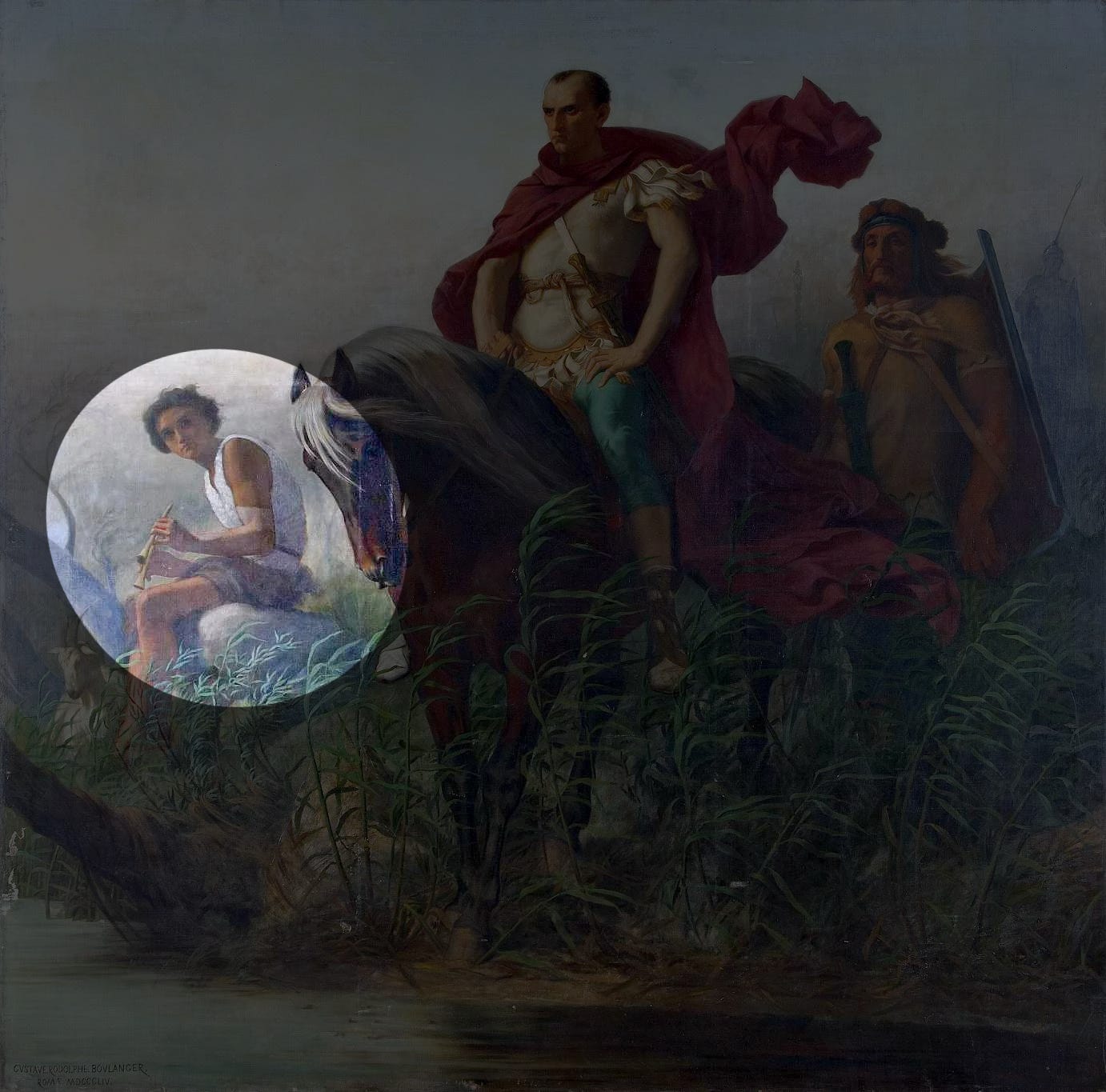
Who is this guy?
When you re-read the story of Julius Caesar, you might ask that question. The answer comes from a strange detail of the version of the story told by the historian Suetonius. As Caesar stands at the edge of the Rubicon, uncertain whether or not to cross, he sees a beautiful youth, playing a song on a pipe:
A person remarkable for his noble mien… appeared close at hand, sitting and playing upon a pipe. When… a number of soldiers… flocked from their posts to listen to him… he snatched a trumpet from one of them, ran to the river with it, and sounding the advance with a piercing blast, crossed to the other side.
Upon this, Caesar exclaimed, “Let us go whither the omens of the Gods and the iniquity of our enemies call us. The die is now cast.”
– The Lives of the Twelve Caesar, Julius Caesar, XXXII
In this telling, Caesar doesn’t decide on his own to change the course of Roman history — he’s just following a boy playing a pipe. What the heck?
This is a question you could pose to the kids. It opens the door to the world of Roman religion, where the world was thick with signs. Lightning, birds, dreams, strange boys playing pipes — many things were taken as omens of the gods. You could spend a few days on questions:
how commonly did Romans make life-and-death decisions based on signs?
were priests and oracles important in interpreting signs, or was prophecy more DIY?
did other ancient societies also see the world like this?
do we do anything like this now?
This example focuses on ancient religion — but you could pick a detail that leads into politics, economics, food, dress, law, military organization, gender roles, festivals, and really anything in the cultural iceberg:
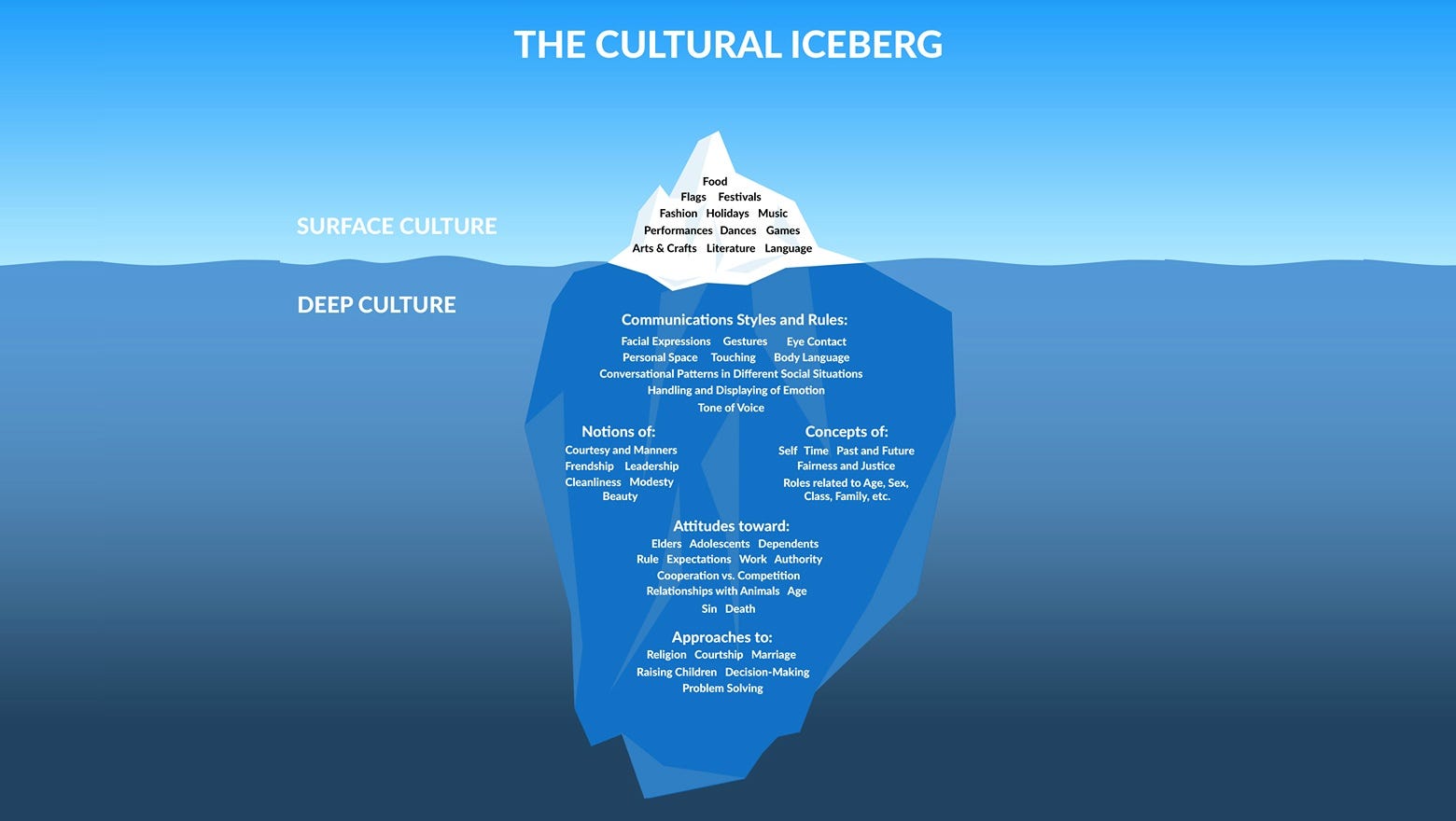
Insofar as you keep a link to Caesar, the goal of this practice is to use him to explore his world. How did it affect him? How did he affect it?
I.I.: I’m not comfortable focusing so maniacally on these “main characters” of history.
Neither are we, actually! To balance against that, this practice can be an easy opportunity to see the world from the perspective of a “minor” character: a bloodied veteran of Caesar’s legion, say, or a one of the enslaved people who carried his equipment.
Egan writes that adolescents begin to master the tools of 🦹♂️CHANGING THE PERSPECTIVE. Indeed, this has become a go-to for novels and movies: Wicked retells The Wizard of Oz from the Wicked Witch of the West’s point of view; Ender’s Shadow retells Ender’s Game from Bean’s; The Wind Done Gone retells Gone with the Wind from the POV of Scarlett O’Hara’s half-mulatto sister.
Where have we come from? Where are we going?
I.I.: You’re still sticking to stories, I think. History is so much more than this — ideas and processes and
Just wait until the final part of the history curriculum… actually, a word about that.
This progression in students is not accidental — it mirrors the deep history of the discipline itself. I’ve said before that history is, more than any other subject, the glue that binds an Egan education together. What I haven’t said, though, is how it was the spark that lit the fire of Egan education in the first place.
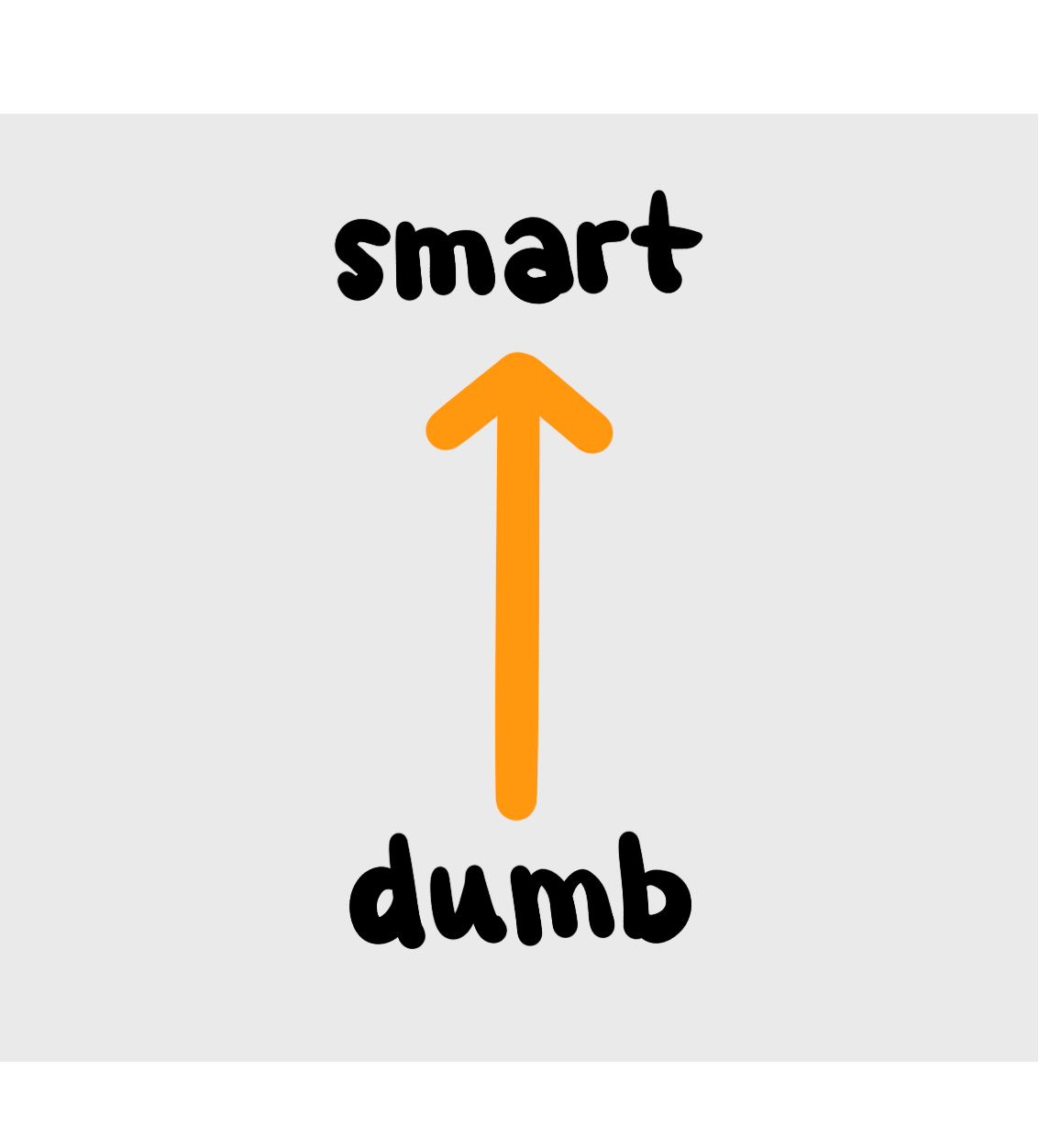
Kieran Egan’s entire paradigm of education began with his insight that all the educational theorists he read were missing something big about how kids learned history. The usual line was that students started by learning a few historical facts, then learned more, and then learned more:
When he observed how students actually seem to learn history, however, he saw something different:
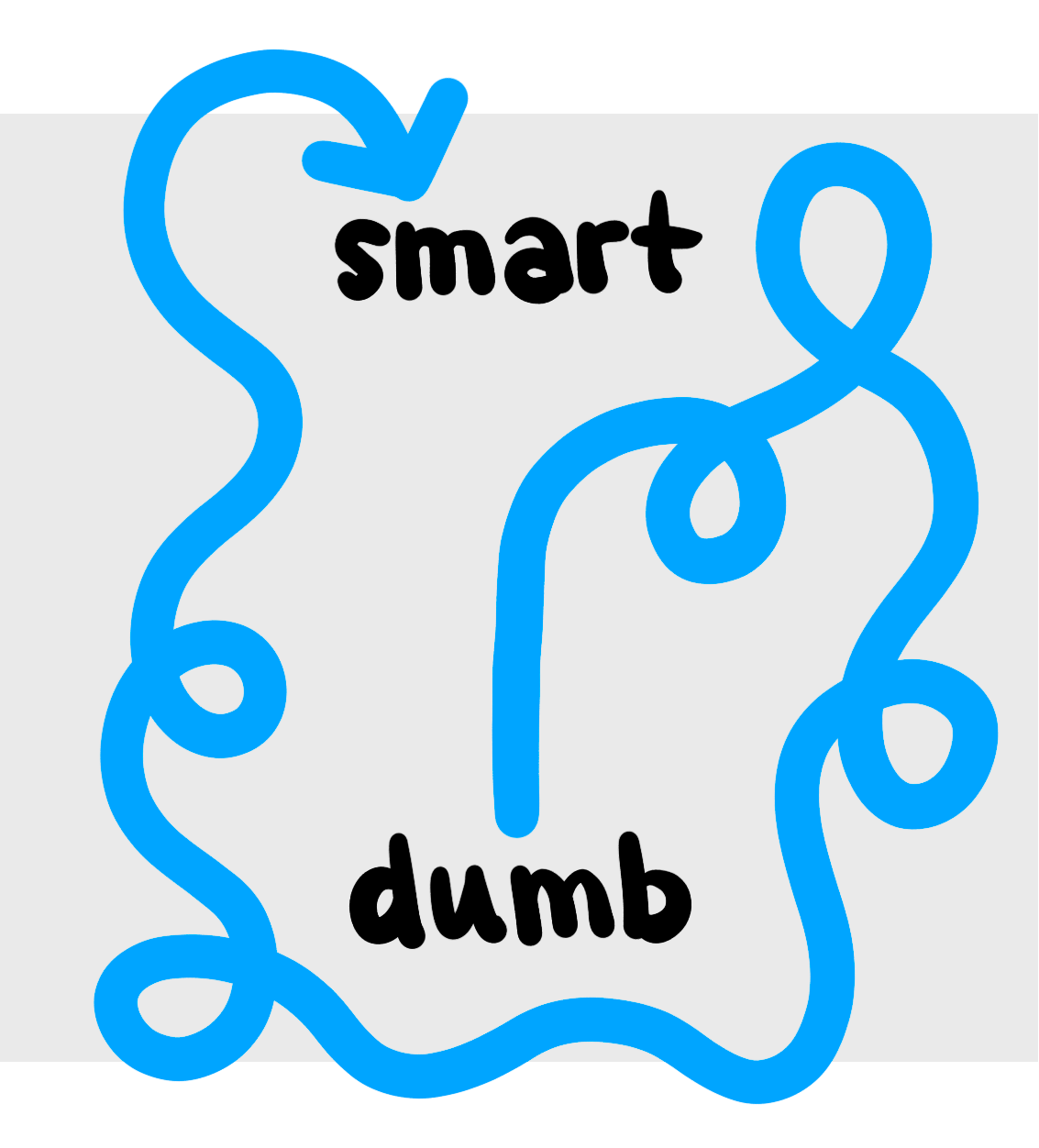
And there was method in this madness: Kids don’t naturally begin with abstractions — they begin with stories. We go from 🧙♂️SIMPLE STORIES to 🦹♂️COMPLEX NARRATIVES to👩🔬ABSTRACTIONS.
To Egan, this seemed to mirror how the discipline of history itself evolved. What was history before it was history? MYTHIC (🧙♂️) stories about ancestors. What was history at its inception, in the Greek “Father of History” Herodotus? Complex, ROMANTIC (🦹♂️), larger-than-life narratives that tried to engage the real world. What did history finally bloom into with Thucydides, the father of “scientific history”? PHILOSOPHIC (👩🔬) attempts to use abstractions to describe huge processes which otherwise couldn’t fit inside our heads.
If Egan was right, we are not inventing a clever curriculum — we are aligning education with the deep grain of how human understanding actually grows.
© 2026 losttools.org. CC BY 4.0
Anyone know of any rap or hip-hop that works on the common meter? My attempts here have proven fruitless.
In order: Leif Ericsson, Eleanor of Aquitaine, Genghis Khan, Zhu Yuanzhang, Zheng He.
“Living books” is a phrase used by Charlotte Mason, and her movement has some helpful tips on what makes for a “living book” (here’s a video and essay by the wonderful Sonya Shafer). I think Egan has something to add to this conversation, and would love to chat with any Charlotte Mason people about this.
I have a question about the history memory palace in general. The other examples of memory palaces I’ve seen, like elements and presidents, always seem to be very orderly and defined. You can only order elements and presidents in one way and you can’t leave anything out. Ford has to come after Nixon and before Carter and there will never be any other 1970s presidents to add. But with history there are well over 100 stories that we hear about all the time. Two people who came up recently with my son just from reading and conversations are Judah Maccabee and King Tut. If we were in the process of building a memory palace I think he would want to add them. Would that mess up the memory palace though? And when the memory palace is complete, what do you do with new stories? It seems like the way to add new stories would be to memorize the dates, which of course is the classic thing everyone complains about with history.
Re: common meter rap... my mind instantly went to the Fresh Prince theme song. 😆 I think it works!?