


First, I need to apologize — I was going to do a Substack Live last week, but I threw out my neck in the morning, and spent the bulk of the day fully horizontal. If you showed up and found no one there, I’m sorry to have left you waiting!
We’ll be back today — indeed, in just a few hours:
Sunday, November 22
2pm Eastern / 11am Pacific
Here’s the link. We’ll be going straight to episode 5 of Sold a Story, “Why It Works”.
The episode suggests that Direct Instruction respects our evolved human nature (and that some other forms of instruction don’t). Well: there’s a lot that’s right about this claim, but also some things that it misses. Big things.
Egan saw his paradigm as being a fulfillment of Darwin, but in a different way than most folk were looking for. So we’re going to explore a bit about human evolution, anthropology, and what Egan education offers as a fuller view of human nature… one that, I think, proponents of Direct Instruction might like, and find helpful.
As always, feel free to watch, even in you haven’t seen our first, second, or third reactions to the episodes of Sold a Story. (Per my missing last week, we’re just going to skip the fourth one.) Bring your random questions, principled pushback, and whatever.
Everyone’s welcome — free and paid subscribers, and random folks from the internet. (If you’d like to share this in a community, go for it! I’ll help folks catch up to what we’re talking about.)
What did evolution prepare us to learn?
https://open.substack.com/live-stream/469608
All right; evolution’s done, now onto religion.
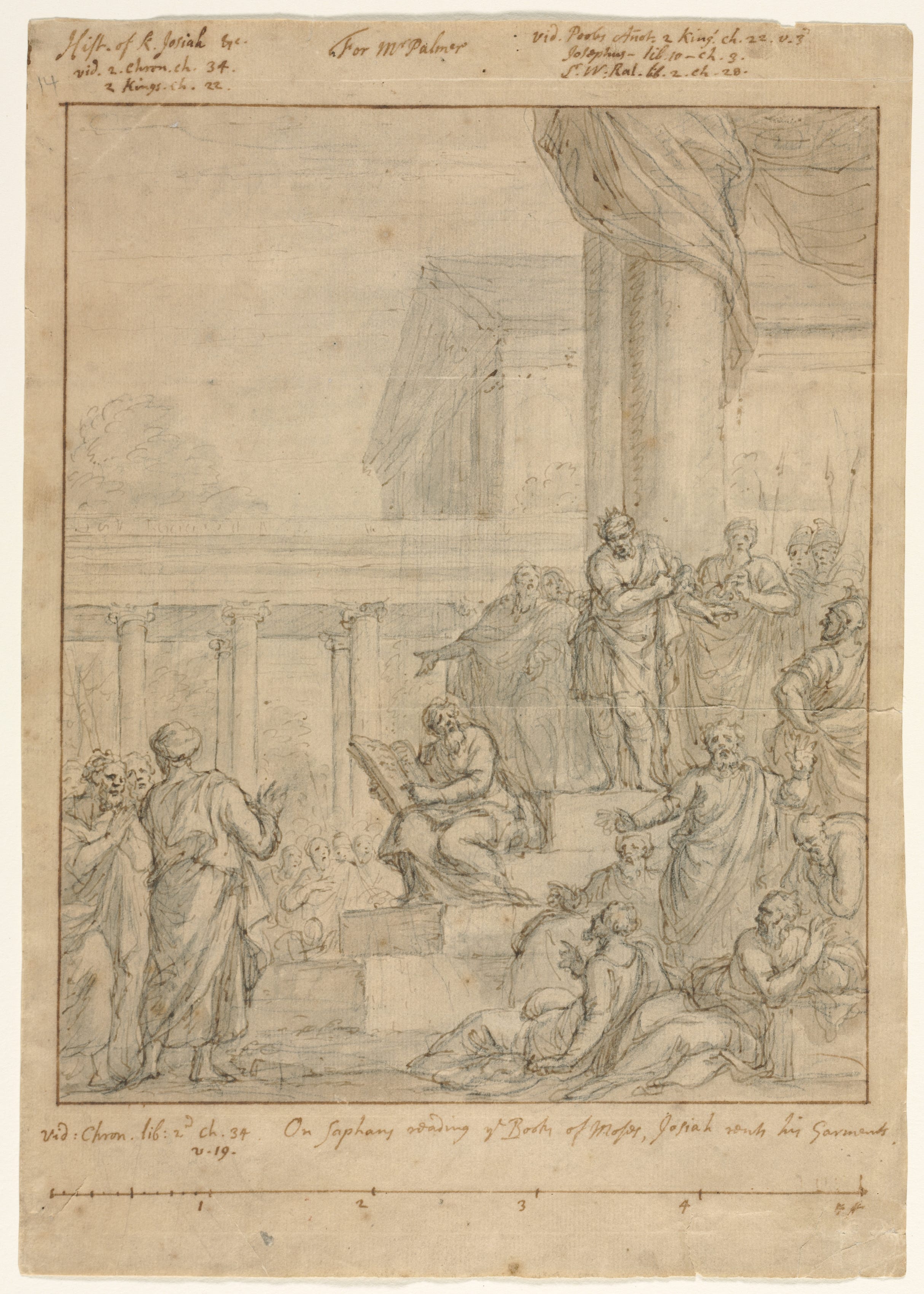
How much can we monkey with a Bible story?
Regular readers might remember that our team’s first major foray into making Egan education a reality is to produce a short history curriculum that helps kids, parents, and teachers (1) fall in love with world history and (2) build an expansive understanding of it in a year. We call it Big Spiral History, Year 1, and we’re putting so much love into it I want to puke.

Recently, we were called upon to write a story of King Josiah, who ruled a little kingdom in what’s now Israel and Palestine, around 620 BCE. According to the classic Bible story, a mysterious scroll was discovered during the renovation of the great temple in Jerusalem. What followed was a religious revolution — one that set the stage for Judaism, Christianity, and Islam.
But it’s a troubling story. It involves smashed temples and slaughter. How do you tell a story like this to kids? How much can you change and how much can you modernize without disrespecting the original text?
We made some controversial choices! I’m curious to see what you make of them.
Josiah, the Bible tells us, was a good king: “He did that which was right in the eyes of YHWH, and loved YHWH with all his heart and with all his soul and with all his strength.”
He was the King of Israel. His ancestor King Solomon — his great-great-great-great-great-great-great-great-great-great-great-great-great-grandfather — had built the temple of YHWH in Jerusalem.
When he realized that the temple needed repairs, he ordered them, sparing no expense. And so the work began. But just a week into the project, Josiah was called to the temple.
He hiked up the highest hill in Jerusalem to reach it. The priests, gathered in the back room, looked nervous.
“O magnificent king,” they said, “as we were rebuilding a wall, we found something.”
“Out with it! What is it?” he asked.
The chief priest held out a very, very old scroll. “It seems to be” he wheezed, “some of the laws YHWH gave to our ancestor Moses.”
“That’s wonderful!” exclaimed Josiah.
“It’s not, though,” said the priest. “These laws are… different from the ones we’ve been keeping.”
“Different,” was all Josiah could think to say. This was bad. After a long silence, he added, “Different how?”
“We’re only supposed to make sacrifices to YHWH — and to none of the other gods. And we’re only supposed to make those sacrifices here, in this temple — not in any of the others.”
“Ah,” Josiah said. “That is quite a change. Does the scroll say what will happen if we disobey?”
“Yes… We’ll all be destroyed.”
Josiah fell to his knees, clutched his collar, and ripped his shirt in two.
“Surely not! Bring me the prophetess Huldah, who speaks for YHWH. She’ll have a gentler interpretation.”
When Huldah arrived, Josiah asked her if there was hope.
“It’s too late for our people,” she said. “But we still must follow the law.”
“What good will that do us?” asked Josiah.
The prophetess glared at him. “Is it only worthwhile to do what’s right when you’re rewarded for it?”
“No,” Josiah said quietly. “Of course not.” He stood up. “I’ll obey.”
He opened the scroll himself and called for the captain of his army. “Do you know the valley where people have been sacrificing their children for generations, because they say ‘YHWH told us to’?”
“I do,” the captain replied.
“YHWH never said that. Destroy the place.”
The captain marched out with his men. When he returned, he was smiling. “It is done, my king.”
“Good,” said Josiah. He unrolled the scroll again. “Now, do you know the many small temples of YHWH across our land?”
“Of course,” said the captain. “Shall I deliver food to them?”
“No,” sighed the king. “Tear them down. And desecrate them, so no one will ever sacrifice there again.”
“I… obey,” said the soldier. His army traveled around the nation, digging up the bones of the dead and burning them on the altars to YHWH. When he returned, he was covered in ash.
“It is done.”
“Good.” Josiah was again holding the scroll. “Now…do you know the shrines of the other gods?”
“Do you mean the ones of Asherah, the wife of YHWH?”
“And those of the storm god Baal, and those of all the rest.”
“Yes. Our ancestors… have worshiped there for generations.” The captain looked ill. His grandfather had been a priest of Baal.
“They must be torn down. And their priests…” He made a quick motion across his throat.
“I see,” the captain replied. He left in silence. When he returned a month later, he looked years older.
“It is done. We— killed the priests, on their own altars. No one will ever worship there again.”
“It is good,” said the king. “Now, it is time to prepare a feast to YHWH.” Josiah threw a nation-wide Passover celebration. “Just as YHWH freed our ancestors from slavery, so he has freed us from slavery to other gods!”
Josiah, the Bible tells us, was a good king: “He did that which was right in the eyes of YHWH, and turned not aside to the right hand or the left.” But still, just a few decades later, Babylon’s army climbed the hill in Jerusalem, burned the Temple to the ground, and took thousands of Israelites back to Babylon as captives.
Imaginary Interlocutor: What the ever-loving #$%^, man? Why would you tell this story to KIDS? There are so many happy stories from the Bible; why are you picking THIS one?
Because this is a history curriculum, and this might be one of the most important moments in the history of religion.

The Bible and archaeology agree: for centuries, the people of Israel1 had worshipped many gods: YHWH, of course, but also gods like Baal (a local storm god) and Asherah (who seems to have been thought of as YHWH’s wife!). And they worshipped those gods in shrines and temples throughout the land. But Josiah’s reforms, as described in the Bible, demanded a radical change: one god, one temple.
This was a major step toward “monotheism”: the belief that only one god exists. Strictly speaking, Josiah’s reforms weren’t monotheistic — they just demanded that people only worship YHWH, not that other gods didn’t exist. Over the centuries, however, and particularly after the Babylonians conquered, this developed into the monotheism that would come to define Judaism — and Christianity and Islam. Today, more than half the people on Earth belong to one of these three religions.
I.I.: Why use the name “YHWH”? Why not just say “God”?
The answer to this one is wonky enough that I’ll put it as a footnote.2
I.I.: Look, this story is really disturbing. Is this appropriate for kids?
This is hard. We decided to take a chance with this story, and are open to changing it. (Eventually, we’ll make a version of Big Spiral History’s “Year 1” for kids in grades 1 and 2, and another version for kids in other ages.)
I’m curious — those of you who have kids and/or work closely with kids, what age is too young for the specific kids? (I’m less interested in generalities, and more interested in particulars.)
I.I.: I don’t like how you portrayed Josiah. According to the Bible, he’s not reluctant to follow the scroll. You’re ruining the character.
We thought long and hard about this. The truth is that the text in 2 Kings doesn’t say much about his internal state. (This is the norm for the Hebrew Bible, and most ancient literature.) To tell a good story for modern people, we felt we had to give him motivations. We saw three possibilities —
Josiah was reluctant to follow the laws.
Josiah was positively excited to follow the laws.
Josiah was a robot, and followed the laws without any human emotion.
We considered #3, but that seemed a little too… Adolf Eichmann-y. We also considered #2, but knew that approximately 110% of the families we work with would then read him as a sadistic villain. So we decided to give him a pinch of more modern mores, and go with “reluctant”. He’s trying to be merciful, and is caught in a hard place.
In this, we’re not alone — in the Babylonian Talmud (Megillah 14b), a great rabbi living in the 200s CE is asked why Josiah consulted the prophetess Huldah, rather than the more obvious choice of the prophet Jeremiah. “Because women are more compassionate, and he hoped that what she would tell them would not be overly harsh,” the rabbi responds.
I.I.: What other changes did you make?
Mostly small ones. Of course we invented most of the dialogue in the story, making it more modern. But that’s par for the course in adapting ancient texts. You can read the original story in the Biblical book of 2nd Kings, chapter 22 & 23.
Interestingly, there are two accounts of this event in the Bible; the other is in 2nd Chronicles, chapters 34–35. There are some significant differences — in the second, Josiah has already begun his reforms before he finds the scroll. 2nd Kings is the more compelling narrative, and we decided to base our story on it.
I.I.: Any bigger changes?
One — in 2 Kings, the prophetess actually promises Josiah that, if he enacts the new (old) laws, he’ll be spared seeing the destruction of his country. Early versions of this story included that, but… it makes Josiah seem selfish? At least it did to me. I nixed it as being not part of the core narrative.
I.I.: Is this all that Big Spiral History is — short stories?
They’re the heart of it, but they’re by no means all of it. Once each story is written, we have it performed and recorded; we also write a bunch of notes to help adults (and older kids) understand the bigger picture. We also create a few ways to play with the story — this one involved a dramatic re-enactment of the moment the prophetess Huldah enters the room, a role-playing debate in which kids act as Josiah’s royal council, and an evocative drawing project to distill the “before” and “after” state of the kingdom into one split picture.


I.I.: This sounds… fun.
Writing these is both (1) incredibly hard and (2) one of the most meaningful and exciting things that I get to do on a weekly basis. The promise of this curriculum is that we give 135 really thought-provoking stories to kids in the early years of their educations, and then help them wrestle with (and build on) those over the years.
If you’re interested in poking around what it might be like to write one of these stories, let me know — either in the comments, or as a direct message! At the moment we have a stable of good, regular writers (each writing one story a week) but if you’re interested we’d love to talk with you. We can match you up with a future character we’ll need to write a story for (e.g. Mussolini, Norman Borlaug, Bartolomé de las Casas…), and can give you a lot of advice and feedback in making the story great.
And I should say that what’s hard about this is that each of the regular writers writes one a week; this is of course easier if you get to have more time… and we can give you more time on these. If we end up using your story, we even might be able to give you a little gift. If you’ve been looking for a creative outlet, or would enjoy helping us out, drop a line.
And the people of Judah — Israel and Judah split in the 900s BCE, right after King Solomon. We mush these names together in this story, because we’re trying to keep it simple.
Why write “YHWH”? Because the Biblical story doesn’t say “God”, and saying “God” is more confusing than helpful. “YHWH” is the name of the god that King Josiah worshipped. Lowercase “god” is a common noun pointing to a class of divine beings. Uppercase “God” is when we use that common noun as a proper name — something that only makes sense when someone is a monotheist.
(I personally get this from the theologian and historian N. T. Wright; I’ve found it to be very helpful in understanding the Bible in its original context.)
Anyhoo, “YHWH” is typically pronounced “Yahweh”, though as vowels don’t get written in ancient Hebrew, that’s an educated guess. Eventually the name gets Latinized and Anglicized as “Jehovah”. Traditionally-minded Jews don’t pronounce the name “YHWH”, though (they’ll sometimes say the word “Adonai”, “my lord”, in place of it; some communities say “HaShem”, “The Name”, instead), and we decided to nix the vowels. It connotes some of the alienness of the ancient world, and is an opening to the history of writing and religion. When Emma Baker, our performer, pronounces it, we have her say “The Lord”, which is another way the name is traditionally rendered.