

Where does our math come from?
Around 600 BCE there was an explosion in ancient Greece, and we’ve been trying to re-create it ever since.
Last week we talked about the roots of Greek math: wandering Babylonian priests sharing riddles around campfires. But how did we get from those riddles to modern math? The answer, according to the historian of mathematics Reviel Netz, is the quest for glory.1
Take a look at the first distinctively Greek math problem we’ve found record of —
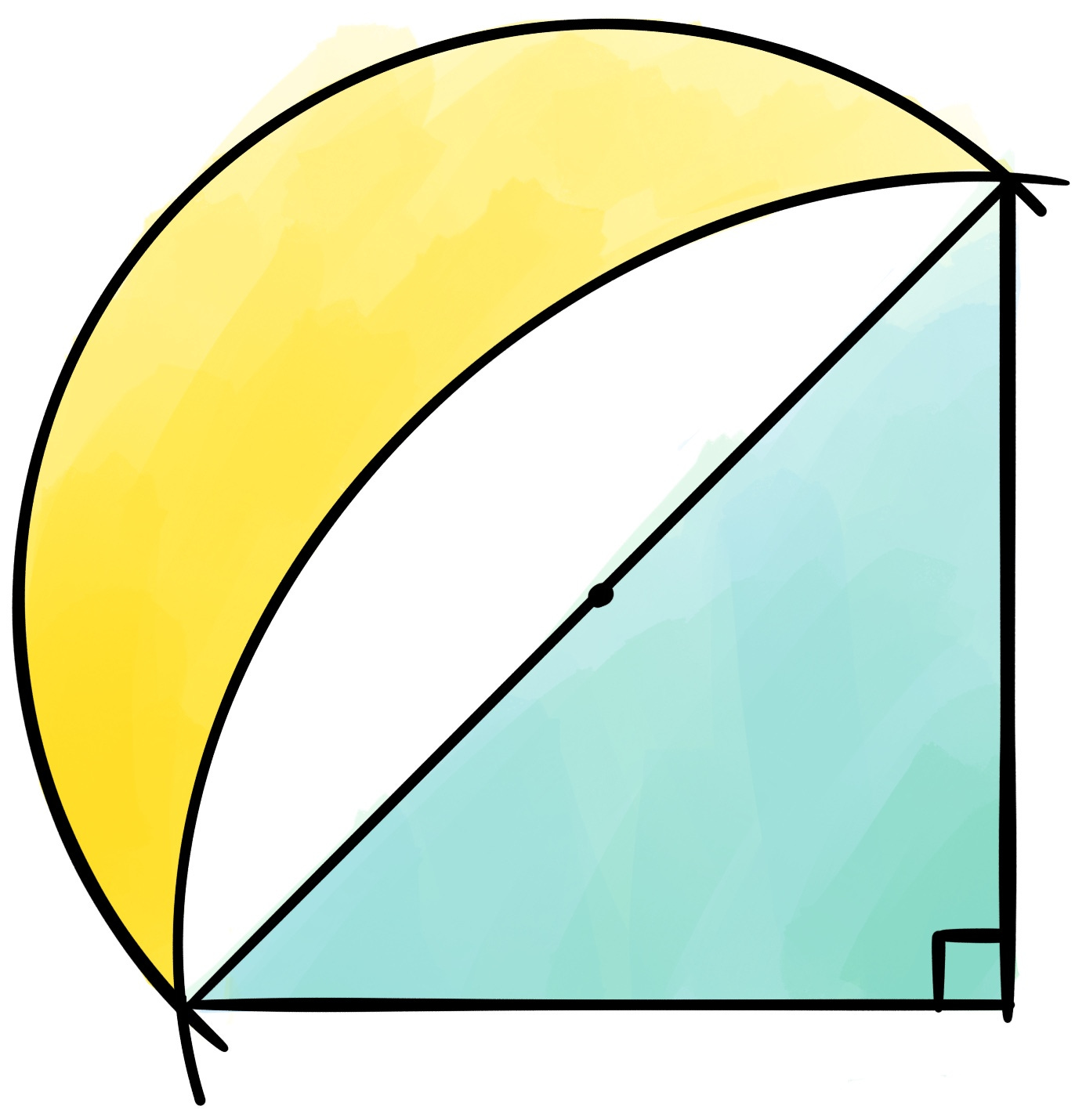
What’s the area of the yellow moon? If it helps to give numbers to the triangle’s sides, call them “1”. Peer at it for ten seconds. (Hint: the moon is formed by drawing arcs — the moon’s “inner” curve is a quarter-circle centered on the green triangle’s right angle, and its “outer” curve is a different half-circle centered on that big black dot.)
This is the famous Lune of Hippocrates.2 Before this, clever people could do a fine job figuring out the area of a shape made of straight lines, but no one could figure out how to do it with one made of curves.
Until Hippocrates. He constructed this, and showed that the moon’s area and the triangle’s are exactly the same. His proof is short and elegant. Netz explains it well:
…you start out not assuming anything… but a few sentences later, you have been, epistemologically speaking, punched in the gut. You cannot speak back, you are doubled over by the force of the proof. You must stare at Hippocrates and admit: yes, you won. You are right. The [lune] is equal to the triangle.
– Why the Ancient Greeks Matter: The Problematic Miracle That Was Greece
We need to understand that mathematical proofs began as provocative artworks — think something like Picasso’s Guernica or the opening to Beethoven’s Fifth Symphony or the ending of Planet of the Apes. This shock of delight became the dragon that all future mathematicians would chase for more than two thousand years. Netz again:
From this knockout there is no turning back and mathematics, henceforth, would be the science of amazing proofs.
What happened? How’d Hippocrates pull this off? What made the Greeks special?
Old-school racists, of course, had a simple answer to this: it was in their DNA. Greeks were just smarter than everyone else; their intellectual victory was inevitable. Alas, the subsequent history of Greece doesn’t give us any confidence in this — after it was conquered by the Romans, its creative intensity dampened.3
A better answer comes in looking at the particular moment in which this explosion sat. In this blog, we’ve made a big deal of two factors:
the first easily-usable alphabet was invented in Greece; this allowed common people to share their ideas farther, and across time (see Origins of the Alphabet°)
the particular place the Greek miracle began — the islands off of Turkey — was a hotspot for trade; anyone living there could see that there was no one “natural” way for humans to live (see Other Alphabets°)
Netz adds a third observation: the nearby empires were centrally-run bureaucracies. Rulers ruled, and subjects obeyed. Because of the mountainous island geography of Greece, its people were broken up into small city-states that ran themselves. Societies were relatively egalitarian. In these cities, status came from the ability to persuade other people. In these cultures (Athens above all) if you could say something new and interesting, people would celebrate you. You’d have clout and the chance to exercise power.
It’s in this context that “the author” gets invented. Stories and poems had existed for eons, of course — but they were anonymous or semi-anonymous. Suddenly, we get individual philosophers and poets who made a name for themselves through outrageous utterances.
You could achieve personal glory through your ability to compose a poem, to wax philosophic, and — suddenly — to prove a surprising mathematical truth.
Imaginary Interlocutor: This history is fun and all, but what does this have to do with middle school?
Because the origin of math tells us a lot about what we struggle with now. Why don’t we regularly see genius in contemporary math classrooms? Maybe because we’ve re-created Sumerian classrooms:
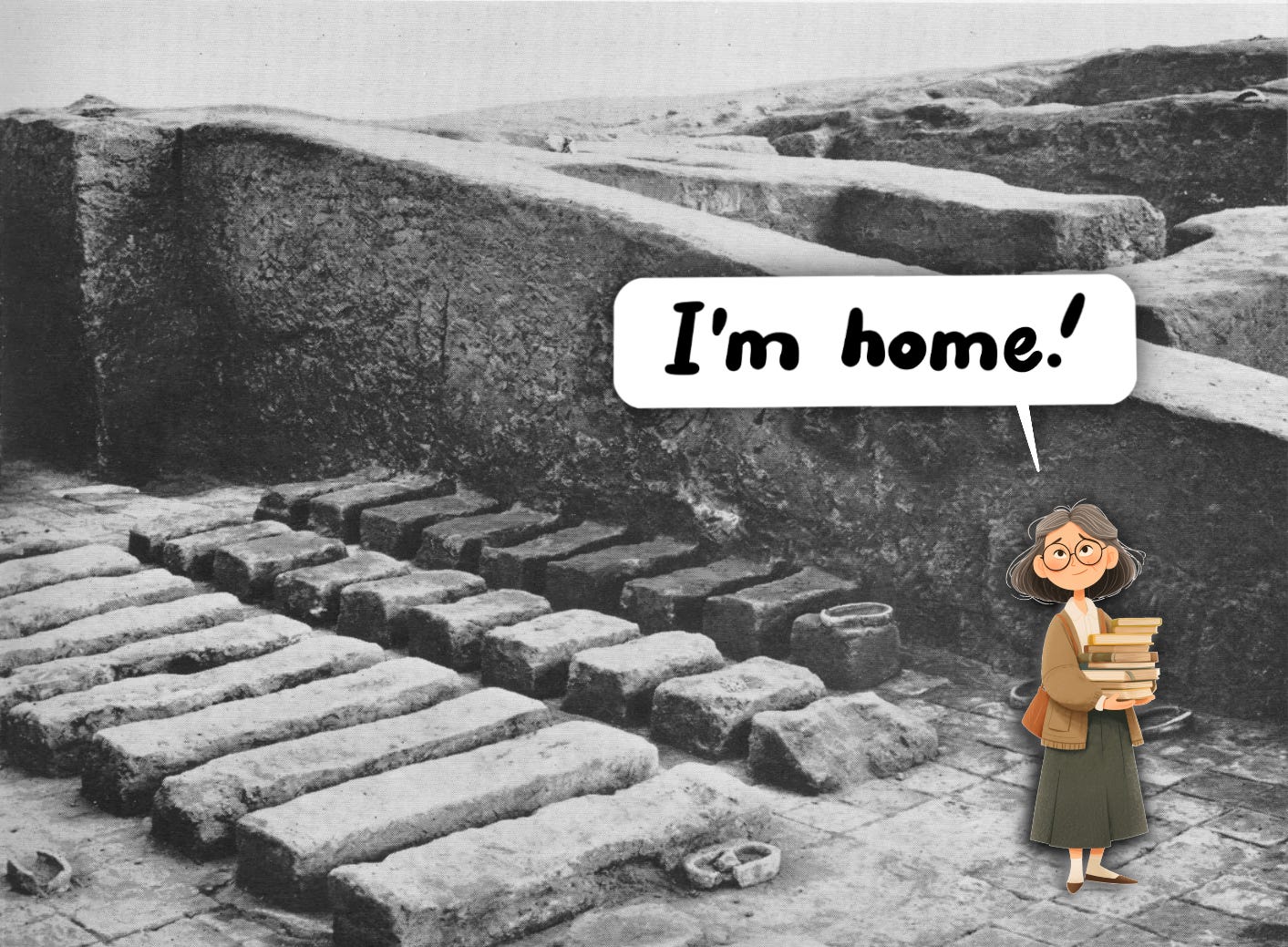
An educational traditionalist might tell you we need to double down on this. (This seems short-sighted.) A progressivist might say we need to liberate kids from this and restore humanity’s native love of numbers. (This seems blind to humanity’s long indifference toward math.)
An Egan-head, however, might ask how humanity became obsessed with mathematics in the first place. That runs through (1) riddles & puzzles, into which (2) a quest for glory is injected.
We began the first in elementary school. And middle school seems a good time to start doing the second.
I.I.: Could a “quest for glory” backfire?
Indeed — we’re playing with psychological fire here. I’ll address that at the end of this post.
So what does glory look like in middle school math? Four things: mysterious messages, complex games, joke-telling contests, and impossible puzzles.
🧵PUZZLES, Practice A: Mysterious Messages°
In elementary school, we delivered kids Mysterious Messages° in a rather simple way — “oh look, here’s a sealed envelope”. Now in middle school this continues, but the mystery merges with history.
In short, continue giving encoded messages, and helping kids solve them. Obviously, keep making the ciphers more elaborate, but also start finding ways to power them with a lust for glory.
I.I.: How elaborate are you thinking?
In elementary school, we want to start with super-simple ciphers like Caesar shift…
A → B
B → C
C → D…
and Atbash…
A → Z
B → Y
C → X…
You can combine these in various ways, of course. But these ciphers are weak: as soon as you figure out one or two letters, you’ve broken the whole code. So in middle school, we can move to straight-up monoalphabetic substitution…
A → B
B → X
C → whatever you want
This is much harder to solve. You can’t brute-force it (at least not without a computer, or a lot of willpower). The way to solve it is to analyze letter frequencies: if the letter “Q” comes up a lot, see if it makes sense for it to be an “E” or a “T” or an “A”.
I.I.: And how can you fuel this with a lust for glory?
A few routes. (And a clever Cipher Master — someone we’ll need to find to help us develop this curriculum! — could come up with more.)
First, we can tell the stories of the 🦹♂️HEROES of cryptography. Among them:
Alan Turing, whose brilliance may have shortened the life of Nazi Germany by years (and who was rewarded by his government with chemical castration)
Thomas Phelippes, whose cleverness decrypting the letters of Mary, Queen of Scots led to Mary’s beheading
Elizebeth Smith Friedman, who dismantled networks of rum-runners in Prohibition and exposed Nazi spy rings in South America
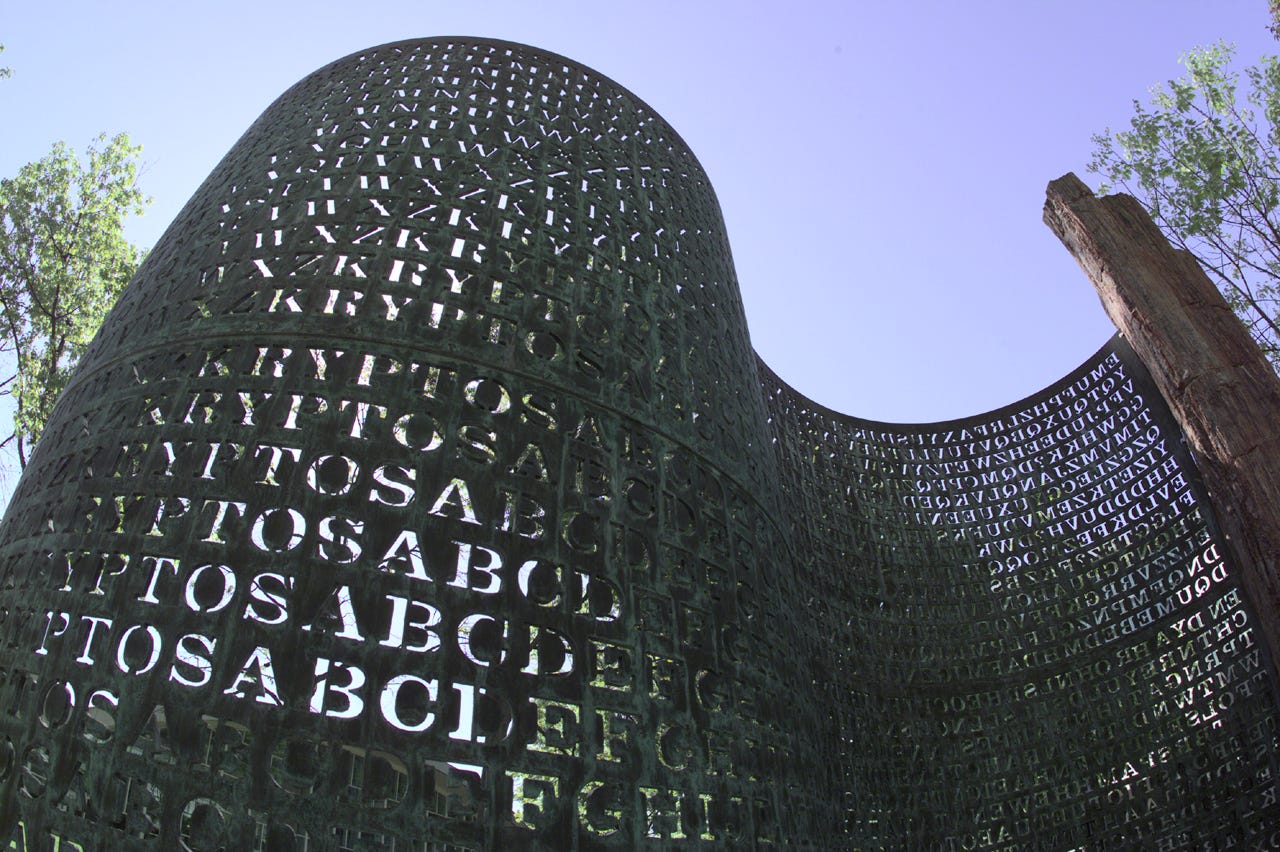
We can also hold 🦹♂️CONTESTS to see which teens can crack a new code the fastest. And we can invite them to encipher a message that no one can crack! Emulating the famous Kryptos monument outside the CIA, these teenage works can be hung up on the wall as a challenge to anyone who comes inside.
🧵PUZZLES, Practice B: Board Games°
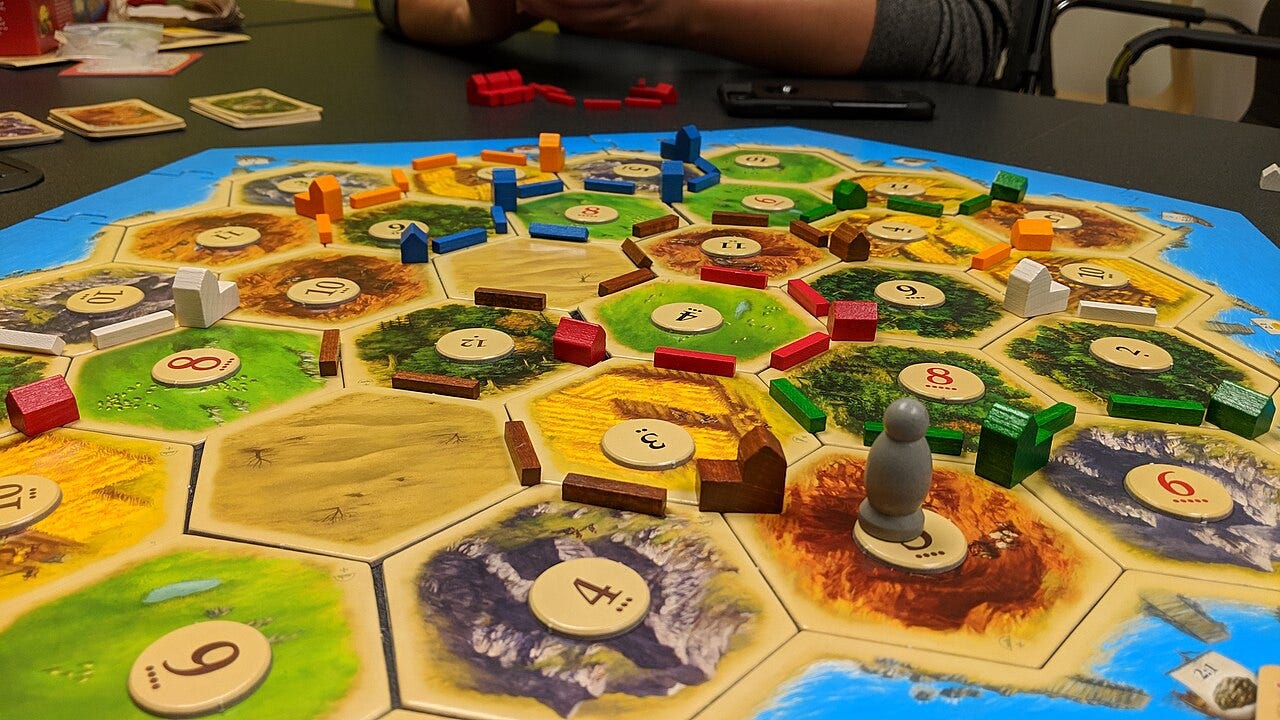
Last week, I wrote about how board games in elementary school can power analytical thinking. And now, as with Mysterious Messages°, as these continue, they should get more complex, and be charged with more glory.
I.I.: In what ways should the games get more complex?
Obviously, we should add on more complicated games. If elementary schoolers played Checkers and Carcassonne, middle schoolers can move to Hive and Settlers of Catan.
But we can also increase the complexity by playing old games in new ways. What would happen if you changed one rule of Connect Four, and let players remove one of their discs at the bottom of a column instead of adding a new one to the top?
When playing an old game, you can institute a meta-rule: whoever wins must invent a new rule for the game and write it down inside the game box. Try the rule out — how does it change the way the whole game works?
I.I.: And glory?
Learn about the greatest players of the games you love. The 🦹♂️LORE of chess masters is so famous that even those of us who don’t play recognize some grandmasters, but did you know that there’s a GOAT of Checkers and a GOAT of Scrabble?
Getting good at a game, too, feels cooler when you understand some of the history of where the game comes from — it helps you imaginatively enter into the tradition. So look up some of the 🦹♂️HUMANIZING KNOWLEDGE of the games that you’re playing.
🧵PUZZLES, Practice C: Jokes°
In our elementary school puzzles post, I argued that we should hone analytical reasoning through helping kids learn and create jokes — especially ones that play with words.
These should continue, and we should increasingly move into jokes that engage satire.
I.I.: Why satire?
Alessandro suggests that different modes of comedy develop from different ways of understanding:
SOMATIC (🤸♀️): slapstick
MYTHIC (🧙♂️): basic wordplay
ROMANTIC (🦹♂️): satire (plus refined wordplay — puns)
PHILOSOPHIC (👩🔬) / IRONIC (😏): paradoxes & irony
To satirize, you have to understand the complexities of how humans interact with each other.
I.I.: How can we do satire with kids?
Satire needs to be about something — so the best place in the curriculum to actually do this is literature and music. After reading a classic story (or listening to a great song), teens can make a parody of it. (For more on this, see an earlier post, Playing Inside Stories°.)
And let’s not kid ourselves about how naturally mocking something comes to most middle schoolers! One way to honor them is to channel this (frequently destructive, consistently irritating) trait into something useful.
Throughout all of this, look for opportunities to hold joke-telling 🦹♂️ CONTESTS.
Historically, many cultures have used contests as a way to focus attention on glory-worthy skills. You can imagine contests being made for satire (“write a parody of the Gettysburg Address”) or for wordplay (“this afternoon, we’ll have a 5-minute pun contest on the topic of the isosceles triangles”).
🧵PUZZLES, Practice D: Strange Math°
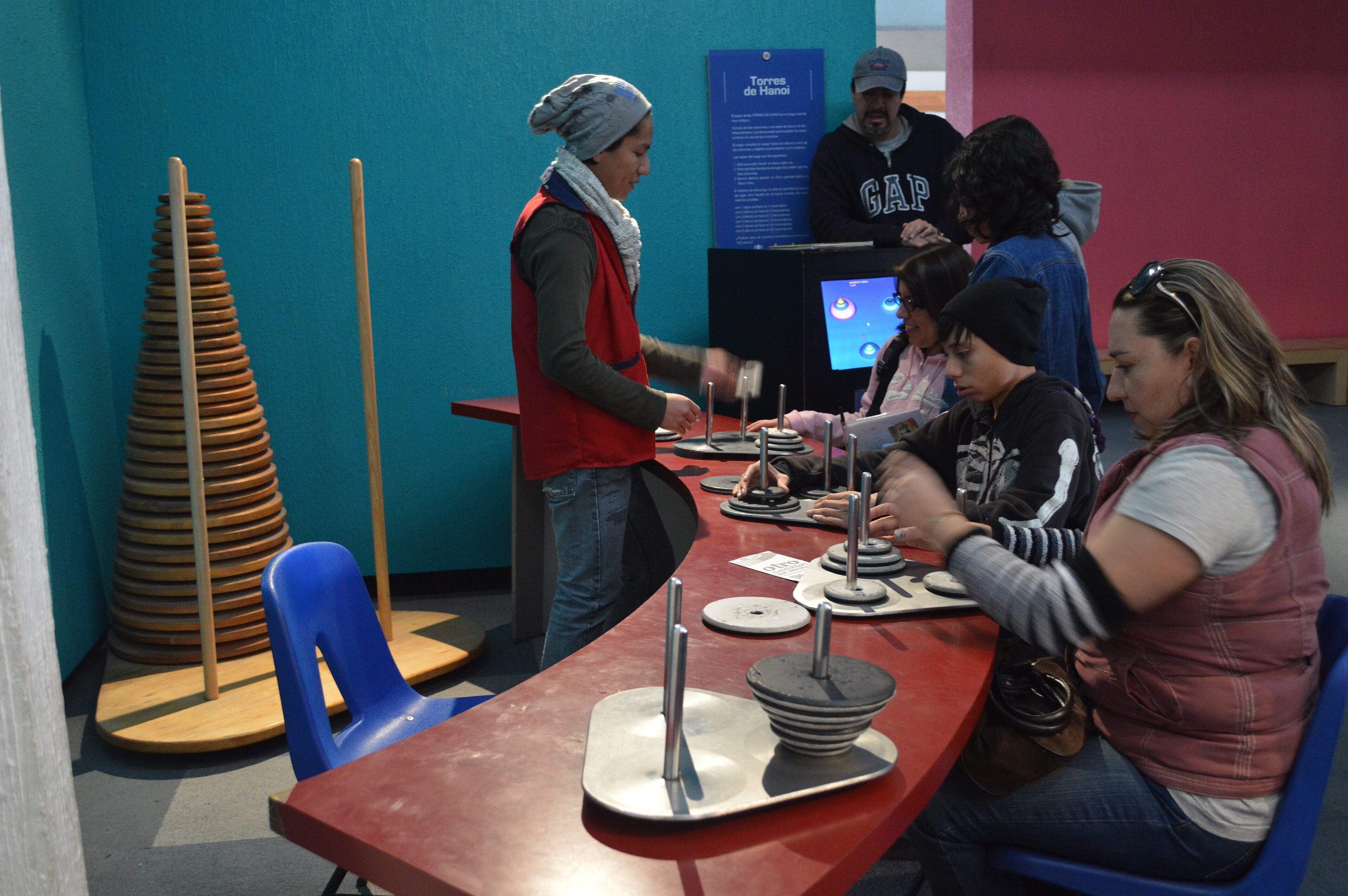
In elementary school, we introduced a smattering of classic mathematical puzzles — one every week or so. We hooked kids with a 🧙♂️SIMPLE STORY to pull them into 🧙♂️PLAYING with the things… and then put them away!
Now, we bring those puzzles back out again, one at a time, and use 🦹♂️COMPLEX STORIES to root them in the actual history of the world, and then push kids to exploring 🦹♂️LIMITS and 🦹♂️EXTREMES.
Let’s take the Tower of Hanoi as our example again.
Phase 1: 💥 Orient
Before, we introduced the Tower with the simple fantasy first told by the puzzle’s creator, the French mathematician Édouard Lucas. Now, we can tell his story:
Édouard Lucas was a French mathematician who wanted math to be something that people delighted in, and wrote puzzles to share math with a wider audience.
He was fascinated by the idea of “recursion”. In the 1880s, he came up with a puzzle that showed how inside a big problem could be a smaller problem, which could have a smaller problem inside it, and so on.
He called this “The Tower of Hanoi”, setting it inside a make-believe story of monks and the end of the world. He published it in a journal and watched as it took on a life of its own.
Phase 2: ⚠️ Complicate
Teens have tackled the Tower of Hanoi years before, and you may want to start by just letting them play with it. But soon, challenge them —
how quickly can you, personally, physically, solve the puzzle?
how few moves can you solve it in?
what if you vary the number of discs?
Phase 3: 🐛 Transform
Here, you might just want to set them loose on Lucas’s original problem — how long would it take you to move all 64 discs from one pole to another?
I.I.: How would they solve that?
If you’d like, you can give them a hint — is there a pattern to how many moves it would take to solve the puzzle for different numbers of discs?

1 disc → 1 move (duh)
2 discs → 3 moves
3 discs → 7 moves
4 discs → 15 moves (see above)
What’s the pattern? With every new disc, you double the number of moves, plus one. If the teens know exponents, you can give them this as a hint:
Using that insight, how long would it take you to solve Lucas’s original problem, with 64 discs? How long would it take you to solve the 32-disc version in the photograph above?4
The usual thing we do with the 🐛Transform step is to make something — here, teens could write/draw an explanation of how they got to the answer.
Well, if they got the answer. This stuff is hard! And remember that the purpose of these 🧵PUZZLES is to sit outside the mainstream math curriculum and be delight-inducing add-ins.
Phase 4: 🪢 Integrate
Afterwards, prompt teens to reflect on what they learned, and what they’re wondering about now. (This is true whether they’ve solved the problem or not.)
I.I.: I asked this last week, but I’ll ask it again: where would I get a collection of puzzles like this?
We’ll eventually want a Puzzle Master who can make a collection of these. If you have a recommendation for one, feel free to put it in the comments… but know that we’ll be revisiting these in high school, where these same problems will take on a new purpose.
In the meantime, I’ll again recommend Dylan Kane’s wonderful post on his choice of such puzzles, which he dubs “glimpses” (as in, “glimpses into the wonderful math that didn’t happen to fall into the K–12 scope and sequence”). And Dylan, thanks for your help in thinking through this practice!
But is this bad?
I.I.: I believe you that this sort of “quest for glory” was how an obsessive love for mathematics was originally sparked. But I worry — is it necessary now? Couldn’t this sort of egoistic love of the self have downsides? Is math worth making our kids into a**holes?
I have two answers, neither of which is complete.
First, insofar as the story I told at the top is true, I think that we’d be fools to ignore this possible source of math love. That said, yeah, we should go in with our eyes open.
Second, I wonder if there are different ways to channel this. In her book The Mattering Instinct, the philosopher and novelist Rebecca Newberger Goldstein argues that people can be grouped by the four “mattering projects” we put at the centers of our lives:
competitors (who seek to beat others)
heroic strivers (who seek to achieve something great)
transcenders (who seek to connect with something larger than themselves)
socializers (who seek to connect with other people)
Greek mathematics was born by embracing #1 and #2. The third — transcendence — is touched upon by the “sense of magic” that we’re building all our math on, starting in elementary school, and will get even more attention in high school.
So I’m actually feeling okay about how our approach treats most people. It’s the fourth category — the quest for socialization — that I’m not sure how to address in the math curriculum. Maybe a little of this is done by Making Friends with Numbers° and Number Extremes°? Perhaps more of this could be done through communal struggle — so that figuring out math is a way to help the people on your team?
I’d love your thoughts in the comments.
Next up: A quixotic goal
Again, we suspect that there might be one more remarkable thing to chase in middle school math: Fermi estimates and Bayesian reasoning. Look for it in our next post.
And inspiration for this post came from Dan & Katherine Cook at Math for Love, who introduced me to the Julia Robinson Math Festivals. All I can say is, if someone ever asks you to spend three hours in a gymnasium pushing artfully weird math puzzles at middle schoolers, say yes.
© 2026 losttools.org. CC BY 4.0
I’m simplifying Netz’s thesis, but hopefully not oversimplifying it. Once again, I highly recommend Why the Ancient Greeks Matter: The Problematic Miracle That Was Greece. And, while I’m at it, his A New History of Greek Mathematics is wonderful, too.
You possibly guessed that “lune” means “moon”, but “Hippocrates” doesn’t mean “the guy who wrote medicine’s Hippocratic Oath”. Different Hippocrates.
Netz points out that the previous history of the Greeks also doesn’t give us any reason to think they were genetically special. The Greek myths are charming, but so are those of many other cultures.
If you wanted to tackle the 32-disc version in the photo above, could move one disc per second, and didn’t need to eat, sleep, or poop, it’d take a mere 132 years. If you tackled the 64-disc version, you could dispatch it in a quick half-trillion years.
I bought “Why the Ancient Greeks Matter” based on your recommendation but was repelled by his focus on the modern obsession with racism. Still, after writing a very negative review on Amazon, I will attempt to stomach this and search for the nuggets of historical analysis that shine past this.
You can go through some of these modes to get to socialization if you're doing them in a group. Competitions introduce you to competitors, or to make it more central you can put people on a team. For students who are demotivated by competition, you can have people share their reasoning or methodology for solving certain problems and then compare with others - Dan Meyer talks about this sometimes on his blog. If motivation comes not so much through peers but by connection with the teacher, you can show your own personal love for the topic. Humanized stories are another possible vector, showing how much the math mattered to the people who were pursuing it.