


Throughout 2026, we’re publishing the first coherent, end-to-end vision for a fully human K–12 education, grounded in the paradigm of Kieran Egan, that extends beyond what he wrote, and is tailored to be usable by parents, teachers, homeschoolers, and school founders.
The plan
For the next year, this newsletter will be devoted to laying out our vision for each subject, from kindergarten through high school. We’re calling these our “wireframes”. If we do this right, 2026 will be the year we build the foundations for an intellectually vibrant education that scales.
Imaginary Interlocutor: I was wondering why you’d been so quiet!
Indeed! Since the summer, we’ve been working furiously to lay the groundwork for the next phase of our little change-the-world project… and we’re finally ready to show what we’ve made.
I.I.: That sounds important. Where does it fit in your overall work?
I started this newsletter back in August of 2023, and my review of Kieran Egan’s The Educated Mind won the ACX book review contest the month after.
After that, I kicked off our “Egan Pattern Language”. While many readers loved that, others worried that it was too disjointed, and feared it wasn’t likely to lead to actual plans for a school. I came to believe that they were right! So I started looking for ways to plan out the whole curriculum on a larger level. In 2024, I got a $5,000 grant through Manifund to start writing a book on what an Egan education might look like for parents (and especially homeschoolers) in the elementary school years. I gathered together a bunch of parents (our “Skeleton Army”), and in the summer of 2025, I presented what we’d come up with in a series of ten workshops.
The next step, I thought, was to turn those workshops into a book. But then Alessandro started working his magic.
Alessandro Gelmi, as longtime readers will be aware, is my brilliant Italian partner in crime, the Jafar to my Iago, the Brain to my Pinky.
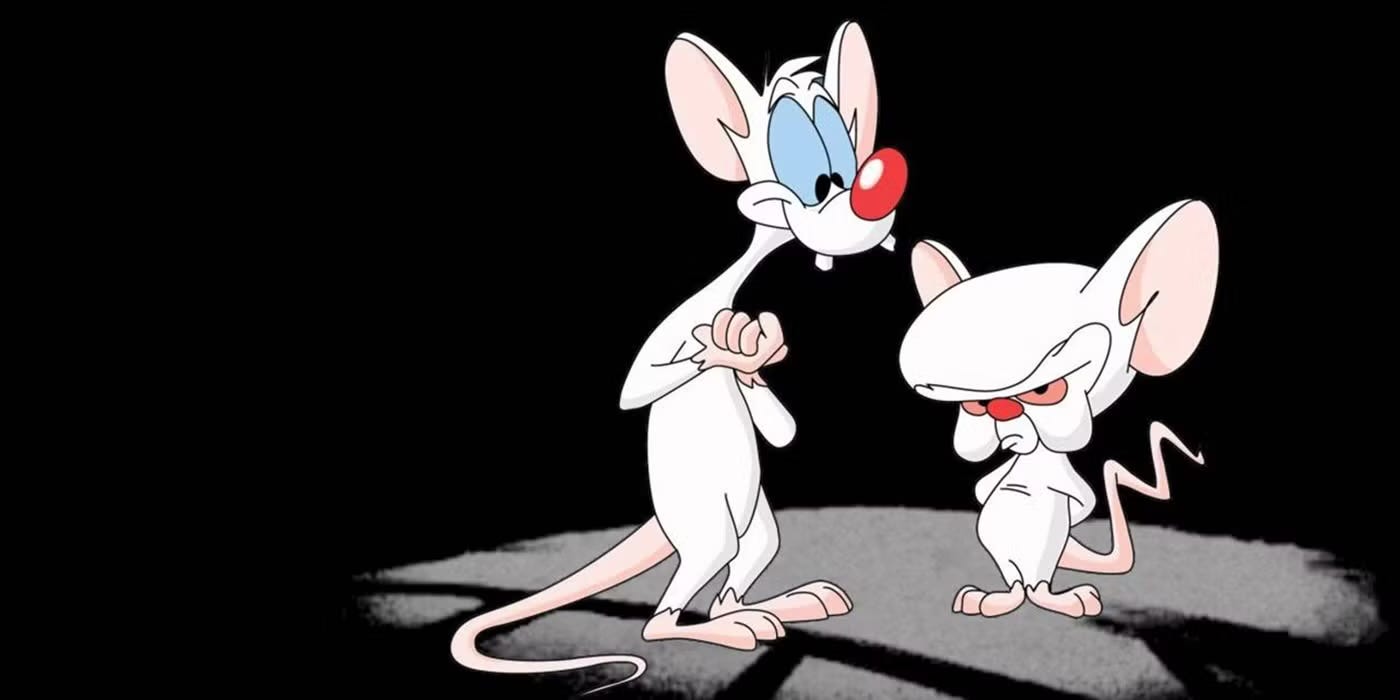
Alessandro and I first met as I was hunkering down to write the book review; we’ve kept meeting each week since. Like me, he’s taught almost every subject at almost every academic level; unlike me, he’s been thinking systematically about what a fully humanized curriculum, grounded in Egan’s work, could look like. He got a Ph.D. in educational philosophy, which usually isn’t a nice thing to say about a person, but in his situation my God he’s actually making it work.
Alessandro pored over the workshops I had given and over the next few months, through brilliance and suffering, turned my disjointed ideas into a comprehensive framework for kindergarten through twelfth grade.
Together, we’ve spent the winter arguing over those, the debates (shown in uncountable rounds of Google Docs comments) making the plans even richer. There are, indeed, few things in life sweeter than a true partnership.
Now it’s time for me to write them up all pretty-like. We’re calling them “wireframes”. They’re more detailed than anything in the book review, and more cohesive and big-picture than anything in the Pattern Language — a happy middle-ground from which we (with the help of many, many others) can develop the week-by-week plans for our new kind of schooling.
I.I.: What do these “wireframes” include?
A plan for how to create a cohesive, fully human education in elementary, middle, and high school.
We’ll have these for all the usual academic subjects:
geography
history
mathematics
art
reading & writing
music
literature
the sciences
…and then, starting in summer, for a bunch of essential human skills:
adulting
cooking
people in your neighborhood
… and finally in fall for some intellectual topics that don’t get the respect they deserve in schools:
foreign languages
architecture
physical education
world religions
philosophy
Each will (by necessity) be pretty long, so we’ll split them up into two posts each.
The first post will lay out the fundamental practices that we can do with elementary-age students, grounded in SOMATIC (🤸♀️) and MYTHIC (🧙♂️) understanding, to help them fall in love with these subjects. It’ll also include a sense of why this discipline matters for us, now — why we all need (for example) geography, cooking, and architecture.
The second post will show how these fundamental practices can evolve throughout middle school — leaning on ROMANTIC (🦹♂️) understanding — and high school — leaning on PHILOSOPHIC (👩🔬) understanding. It’ll also include a realistic hope of what we can expect our students to be able to do by the time they graduate.
I.I.: How long will this take you to publish?
Those are 16 subjects above. If each gets two posts, that’s 32 posts. If I write one of them per week, that’s more than half a year.
I.I.: Okay, so, you’ll be done in July.
Oh you sweet summer child! Hofstadter’s Law applies here as everywhere:
It always takes longer than you expect, even when you take into account Hofstadter’s law.
So I can’t say how long these will take. The goal is to finish these by December 31, 2026 — which happens to be one day before a big secret we’ll be unveiling on January 1, 2027.
I.I.: I love secrets! Can you give a hint now?
Sure. It’s one word, nine letters long, and ends with a “t”.
I.I.: That’s not enough to tide me over, and you know that.
If you pay attention through the year, you might be able to spot some more clues. (Feel free to speculate wildly in the comments.)
But let’s return to the big picture of what we’re making.
The sweet, sweet connective tissue
I.I.: You’ve obviously spent a bunch of time thinking through all this. Any insights on how the whole thing will hold together?
Yes, a few! We often throw around the phrase “fully human”. Those two words hold a lot, and happily, we’re getting closer to unpacking them.
In general, helping students become more fully human means helping them fall in love with the world and engaging with it deeply. Doing this well means clearly understanding what we are — what we pull both from our cultural ancestors (going all the way back to early hunter-gatherers) and from our biological ancestors (going all the way back to Grandma Fish).
So, yeah, there’s a lot to unpack there! Recently, we’ve realized that there are two pieces of “falling in love”, and each is important: understanding and taking care.
1: “Falling in love” as understanding
To help kids fall in love with the world, we need to re-enchant the academic curriculum. Happily, this is a solved problem. This is the framework we’re inheriting from Kieran Egan — the ways of understanding that you’ll recognize if you’ve been a long-time reader of this substack:
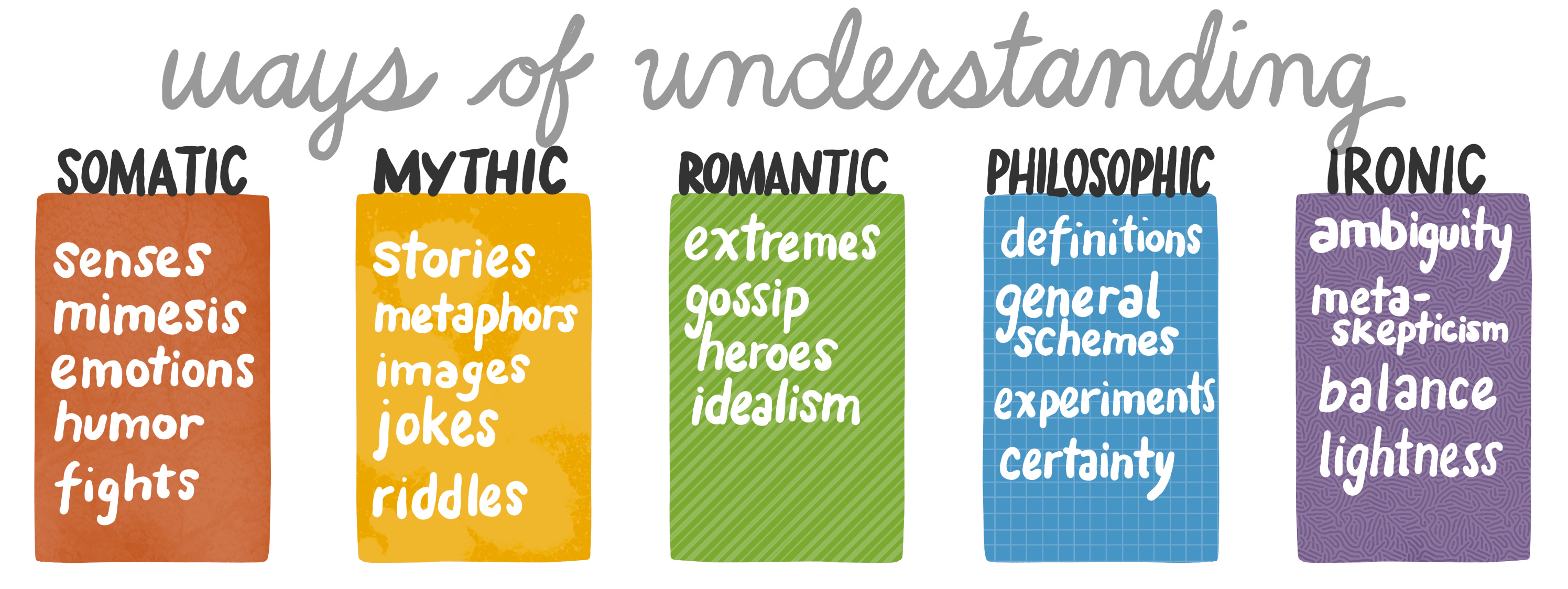
It remains, alas, maddeningly hard to explain! For the moment, the best way to understand it is to read my book review. In the near future, we’ll be sharing another way to understand it, one that Alessandro has been crafting and polishing for years… look forward to an announcement soon.
“Falling in love”, however, means more than just understanding something.
2: “Falling in love” as taking care
We’re extending Egan’s paradigm beyond academics, and will be using it to help students take care of
themselves,
their homes,
their neighborhood, and
the world.
I.I.: “Self”, “home”, “neighborhood”, and “world” — there’s something familiar about this. Am I crazy if this reminds me of the “expanding horizons” model of social studies, which you’ve long claimed to hate?
You’re not crazy, and we do hate it! But there’s a piece of it which needs to be salvaged from the burning, sinking wreck. Look for more about this in the wireframes of the history curriculum, which’ll come out in February.
In any case, this is part and parcel of the vision we have for how a fully human education can help kids grow up. We’re thinking of it like this:
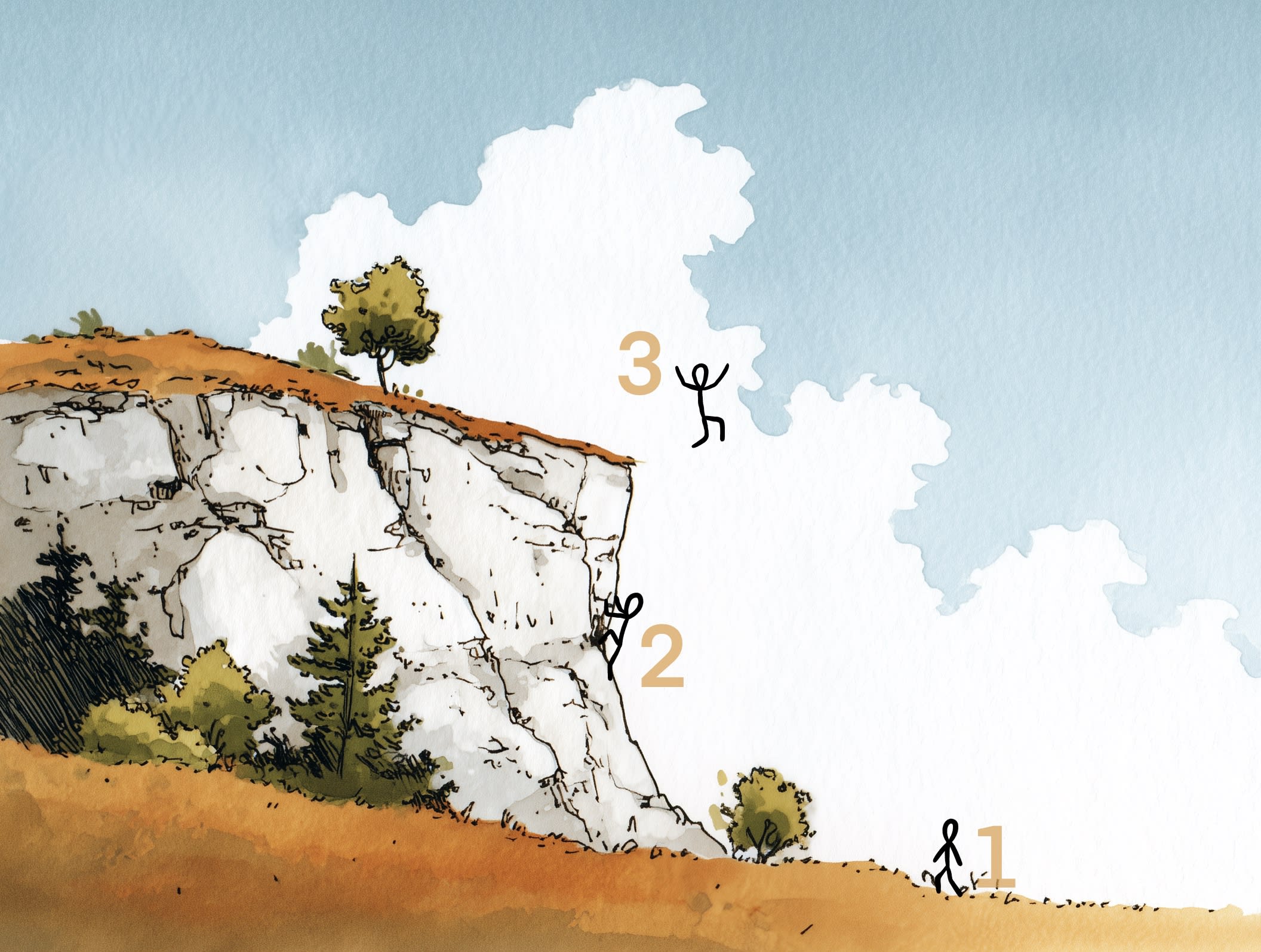
In (1) elementary school, we want to root kids in the world, falling in love with the different disciplines. In (2) middle school, we want to help them climb — to understand their own limits, and learn to overcome them. And in (3) high school, we want to help kids begin to leap into their adulthood, crafting a life that matters. The purpose of all this is to help kids become Renaissance people — to graduate as adults, skilled in many things, with a desire to pursue reality and to help mend the world.
I.I.: That’s ambition, there!
Indeed — but otherwise, why get out of bed in the morning?
This, anyhow, begs the question of how we’re going to help make students able to do hard things.
3: Building skills
I.I.: In the past, people have criticized Egan for not talking much about skill-building. You got any news there?
Skills are, indeed, close to the heart of what it means to be fully human.1 The sad thing is that in schools, skill-building too often is presented as a dry, mechanical process. As we’ve been evolving Egan’s approach, we’ve realized that rehumanizing skills is essential.
To do that, we’re bringing in three of the most important discoveries in 20th century psychology: deliberate practice, spaced repetition, and habit formation.2
If you know much about educational reform, you know that everyone’s in a rush to apply these to schooling. This is all for the good! We, though, can go further. Most of the work on these three concepts comes from academic psychology; when they’re presented to teachers, they can come across as “cool brain hacks”. Again, this is okay! But our humanized curriculum can make them, well, more human:
deliberate practice → becoming great at something you care about
spaced repetition → re-meeting old friends
habit formation → building meaningful rituals
What’s more, because we’re creating a brand-spanking-new system, we have the luxury of making them part of our DNA. So, look for them to pop up in nearly everything we do.
Steal these wireframes
I.I.: If I like the stuff you write in any of these “wireframes”, can I use it myself?
Yes please do that’s literally why we’re doing this.
To grease the gears here, these wireframe posts will be under a special copyright — “Creative Commons Attribution 4.0”. This’ll give you the explicit permission to do whatever the heck you want with this material, including make money off of it! Translate it, use it, improve it, ruin it: whatever floats your boat is fine with us. The only thing you need to do is cite where you’re getting it from, which you can do by pasting this:
© 2026 losttools.org. CC BY 4.0.
Source: [URL of the specific post]. Modified from the original.
(And obviously you can nix that last part if you’re not modifying anything.) This is the same copyright that groups like MIT’s OpenCourseWare, PLOS, and Our World in Data use — the goal is to let ideas move fast, but to give readers a thread back to finding more of what they like.
An invitation
As I said before, if we do these wireframes right, 2026 will be the year that we build the foundations for Egan schooling and homeschooling.
It’s going to take a lot of work. Wanna help?
Option A: Become a paid subscriber
Fun fact about writing: it’s frightening how motivating it is to have paid subscribers. You can support me at the low low cost fairly reasonable amount of $10 a month, and I WILL BE GRATEFUL.
I.I.: Sure, but what’ll I get?
First, access to all ten recordings of the parenting/homeschooling workshops that I created last summer. They were the seeds of these wireframes, so some of what’s in them in will be repeated in these posts… but you’ll get to see it ahead of time. And since they’re so stinking long (2–3 fast-paced hours each) and because their focus is smaller (just elementary/middle school), the ideas they give are more detailed and “boots ready”.
With that, you’ll also get access to some pretty useful lists of our community’s favorite books, YouTube channels, and apps that dovetail with what you’re seeing in the workshops… and the “Eating Poems” curriculum that I created a few years ago.
I.I.: Eh, I’m not a parent or a teacher. Do paid subscribers get anything else?
Yes — a series of subscribers-only posts.
The first set will be “hot takes” (maybe I should call them “rants for sale”?) — a way for me shoot off my mouth on educational questions that don’t, directly, come into the big picture of our curriculum. To ward off my perfectionist tendencies, these’ll be short, loose, and full of splleing erorrs and other things I probably shouldn’t share in public (like my views on AI in education, standardized tests, grade inflation, and so forth). I’m open with all my ideas, but I’m even more open on this stuff; likewise, the comment sections here will be open.
The second will be once-a-month-or-so open threads, and occasional “ask-me-anythings”. These’ll be an opportunity to meet the other folks in our emerging community, and share the projects you’re working on.
This is all to say, we’re building something big! This is a straightforward way to get into the community.
Option B: Become a founding subscriber
This is $500 per year, and in addition to my gratitude undying, I’ll reach out to you, and we can arrange a chat! How can I be of help to you? You’ll also (unless you want to remain anonymous and weird) get a public shout-out, and a gift of three free months of Science is WEIRD, either live or the recordings. (If you don’t have a kid who’d love it, you can gift this to someone who does.)
Option C: Participate and share us!
As always, the questions people ask on the posts and the insights they share are one of the most valuable things that’s come from this newsletter. I’m proud of the intellectually diverse, thoughtful community we’ve accumulated here.
So — if you’d like to help, keep it up! Specifically:
when you don’t understand what something means, tell me
when you don’t understand why we’re doing something, ask it
when you wonder if we’re missing something, say so!
And as we go through the year, we want to share this with more and more people — parents, teachers, and potential school-founders especially. When you see a post you like, “restack” it on Substack, send it to a friend, or share it on Facebook Instagram 8chan I don’t even know what people use these days, why am I pretending to give you advice?
You can also recommend us to any podcasters who you think might like to talk to me or Alessandro. (I love doing podcasts!)
Oh yes, let’s
Enough preamble; we have a world to mend, and it’s time to get started. Next week we’ll start with the very first wireframe, one on which we’ll build so much else. I speak, of course, of that most underrated of academic disciplines: geography.
Or fully squirrel, for that matter — just different skills.
Yeah, okay, Hermann Ebbinghaus discovered the “spacing effect” in the late 19th century. Congratulations, history-of-psychology nerds, you win. For more, see a recent post for how to bring spaced repetition into everything we do.
The list of subjects seems to be missing technology/computer science/programming? And I'll guess the 9-letter word that ends in "t" is "broadcast", that you'll be on tv.
I'm curious what you think should be the place in this curriculum of "industrial literacy" in Jason Crawford's sense: https://blog.rootsofprogress.org/industrial-literacy
or more recently in the sense of Charles Mann's How the System Works essays: https://www.thenewatlantis.com/collections/how-the-system-works
Does it deserve its own subject matter stream, or should it be woven into the "conventional" subjects you list in this post? Or am I, as a Bay Area techie and Progress Studies aspirant/aficionado/hanger-on, overrating the extent of its importance to a fully human K-12 education in our century?